
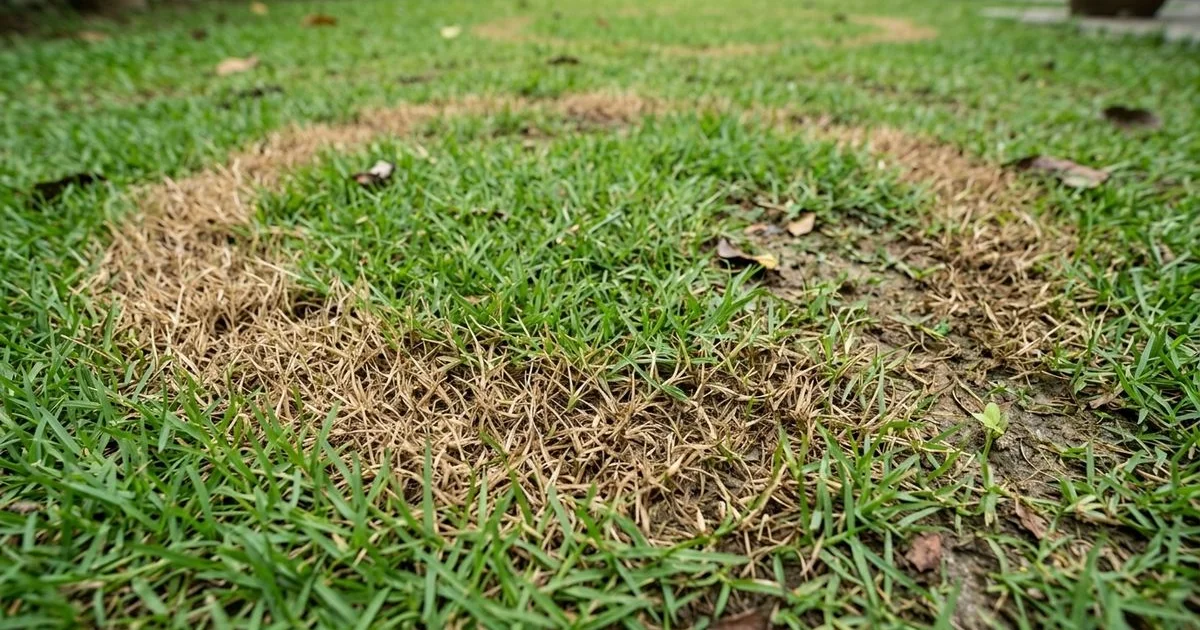
What Brown Patch Actually Is
Brown patch is a fungal disease of turf, and it’s the most common lawn disease we treat through our turf disease treatment in Petaling Jaya. The fungus behind it lives in virtually all soil, doing no harm, until conditions tip in its favour. On a tropical lawn, those conditions are warmth, trapped humidity and surfaces that stay wet for hours: in other words, an ordinary Klang Valley monsoon week on a lawn with poor drainage.
When it takes hold, the signature is shape: roughly circular patches of browning grass, often starting dinner-plate sized and expanding outward, sometimes with a darker, water-soaked ring at the advancing edge. In humid early mornings you may spot fine, cobweb-like growth across affected grass.
Brown Patch vs a Hungry Lawn
The most common misdiagnosis runs both ways: feeding a fungal lawn, or spraying fungicide at a hungry one. The differences are readable:
| Sign | Brown patch (fungal) | Nutrient deficiency |
|---|---|---|
| Shape | Circular patches, defined edges | Even paleness or spreader stripes |
| Spread | Expands outward, fastest in wet weather | Static or whole-lawn |
| Blades | Lesions, water-soaked then tan | Uniformly pale green-yellow |
| Roots | Intact (turf stays anchored) | Intact |
| Response to feed | Worsens, nitrogen feeds fungus | Improves within weeks |
That last row matters most: a nitrogen feed during an active fungal outbreak makes it worse. Soft, lush new growth is the easiest tissue for the fungus to colonise. Diagnose first, then act.
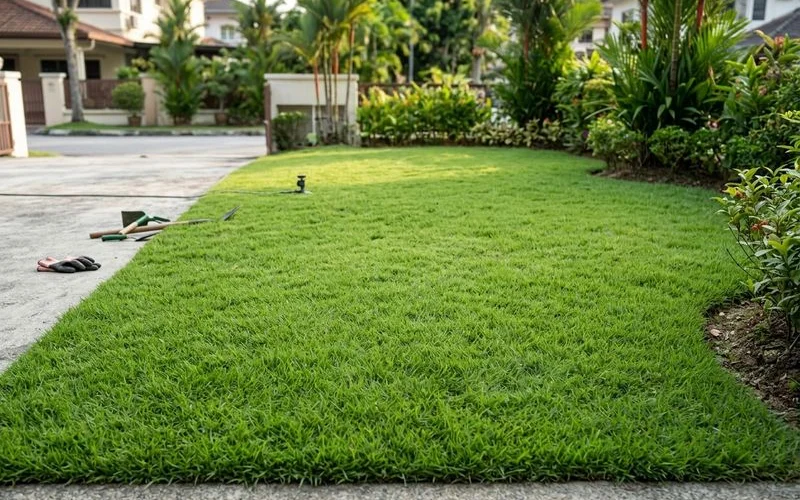
How Treatment Works
Confirm. We inspect the patch shape, edges and blades, and rule out the lookalikes, grubs, drainage stress, scalping damage. If fast-spreading irregular patches sound more like your lawn, check our guide to the signs of armyworms and lawn grubs first.
Treat. A fungicide matched to the disease is applied across affected areas and a buffer zone, with safe re-entry guidance for the household. Heavy outbreaks sometimes need a follow-up application.
Remove the conditions. This is the half DIY treatment skips. The fungus arrived because the lawn stayed warm and wet, so we address the why: clearing thatch that traps humidity, raising mowing practice so the grass isn’t stressed, and where water sits after rain, improving drainage with aeration so the surface dries the way it should.
Recover. Once the disease is stopped, a measured feed regrows the damaged patches, at this stage nitrogen helps rather than harms.
The golden rule of lawn fungus
Fungicide cures the outbreak; drainage and mowing prevent the next one. Skip the second half and the disease returns with the next monsoon.
Preventing the Next Outbreak
Prevention is unglamorous and effective:
- Mow at the right height, on schedule. Long, damp grass holds humidity at the soil line; an overgrown lawn in the wet season is a fungus incubator.
- Don’t overwater. PJ’s rain does most of the job, if you irrigate, do it in the morning so the lawn dries by evening, never at night.
- Clear clippings and thatch. Damp organic mats hold exactly the moisture the fungus needs.
- Fix the soggy spots. Anywhere water pools after a storm is the next outbreak’s address. Aeration on compacted clay is usually the cure.
If your lawn is showing circular brown rings this month, skip the guesswork, send a photo on WhatsApp and we’ll tell you whether it reads as fungus, and what treating it would involve.